




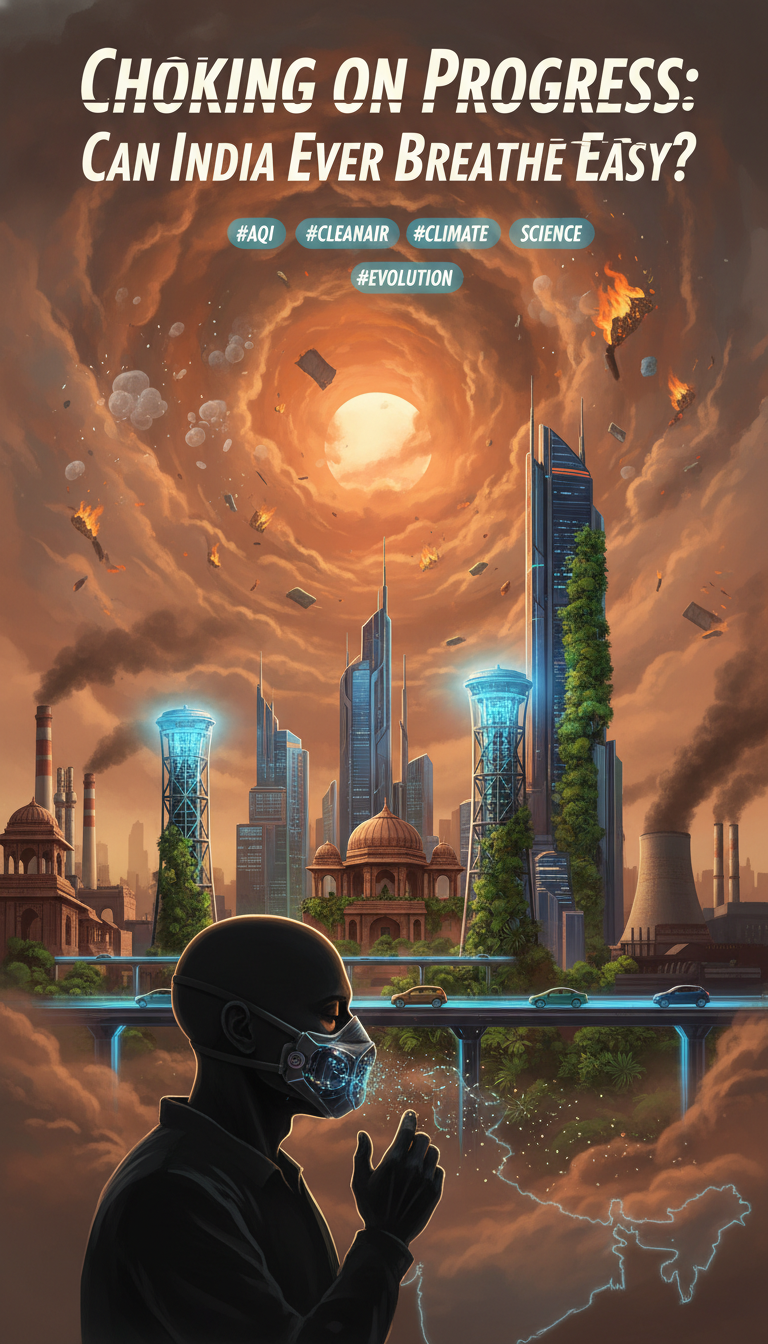
A deep dive into India’s persistent air quality crisis and the global fight for cleaner skies.
I. The Gasp-Inducing Reality: Welcome to India’s Air Crisis
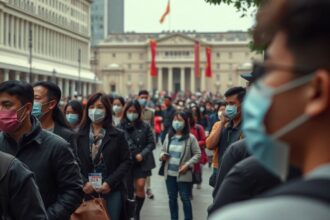
Imagine, if you will, a world where each inhale is a negotiation, a calculated risk weighed against the promise of life itself. A world where the very air, the essence of existence, becomes a veiled adversary. For millions dwelling within India’s borders, this isn’t dystopian fiction; it’s the suffocating now.
The numbers, stark and unyielding, paint a grim masterpiece of ecological neglect. In 2023, a staggering 83 of the world’s 100 most polluted cities call India home. Delhi, a metropolis of dreams and ambition, often finds itself draped in an atmospheric shroud so dense that it transcends mere pollution, flirting with the “hazardous” threshold that would send tremors of panic through other global capitals. This isn’t merely about unpleasant skies; it’s a public health emergency unfolding in slow motion.
#aqi#airpollution
II. Dust, Smoke, & Development: A Brief History of India’s Air Woes
The miasma that hangs heavy today wasn’t always so pervasive, so inescapable. There was a time when pollution was perceived as a localized nuisance, an unwelcome byproduct of industrial zones, rather than the ubiquitous, life-threatening blanket it has become.
The late 20th and early 21st centuries witnessed an unprecedented surge in India’s urban sprawl, a veritable explosion of industrial activity, and a seemingly insatiable appetite for personal vehicles. This rapid ascent, fueled by aspirations of economic parity, inadvertently opened Pandora’s Box, transforming a manageable problem into a full-blown national nightmare.
Of course, attempts to legislate clean air weren’t absent. Early British-era smoke laws, followed by post-independence environmental acts – the echoes of Bhopal still resonate – mark milestones on a tortuous path. The establishment of the Air Quality Index (AQI) and subsequent clean air programs represent more recent attempts to grapple with the crisis. Yet, the question lingers: why have these measures, laudable in their intent, failed to deliver the breathable reality they promised?
III. The Recipe for Respiratory Ruin: What’s Polluting India’s Lungs Today?
The cocktail of contaminants that plagues India’s atmosphere is a complex concoction, a brew of familiar culprits and insidious newcomers.
- ▪Traffic Tangle: Millions of vehicles, each a miniature emission factory, contribute significantly, particularly as they navigate the labyrinthine arteries of urban India, often at a snail’s pace.
- ▪Power Play: The nation’s relentless reliance on coal-fired power plants, the behemoths that fuel its energy demands, casts a long, smoky shadow.
- ▪Factory Fumes: Industrial emissions, a complex mix of particulate matter and noxious gases, constitute a staggering 51% of the overall pollution load.
- ▪Urban Sprawl & Dust Bowls: The frenetic pace of construction, the seemingly endless proliferation of unpaved roads, transform vast swathes of the country into dust bowls, constantly replenishing the atmosphere with particulate matter.
- ▪Burning Issues: The open burning of waste, a practice projected to become an even more significant contributor to pollution in the future, and the seasonal scourge of stubble burning in North India, paint a grim picture of unsustainable practices.
The consequences of this airborne assault are devastating. A staggering 1.67 million premature deaths in 2019 alone bear testament to the deadly toll. Rates of asthma, heart disease, and lung cancer are soaring, while emerging research suggests a chilling link between air pollution and reduced cognitive function, particularly in children. Your life expectancy could be cut short by 5 years, or even 12 if you live in Delhi! The economic ramifications are equally dire, with billions lost in GDP, spiraling healthcare costs, and a palpable impediment to India’s economic aspirations.
IV. Hot Air & Heated Debates: The Controversies Clouding India’s Clean Air Efforts
The path to cleaner air is not without its thorny controversies, its obfuscations and outright denials.
The government’s assertion that there is no “concrete scientific evidence” directly linking high AQI to lung disease flies in the face of overflowing hospitals, expert consensus, and the lived experience of millions struggling to breathe.
Expensive interventions like smog towers raise eyebrows. Are these technological marvels genuine solutions, or mere window dressing, designed to placate public concerns while achieving little in practical terms? Scientists, it seems, lean towards the latter.
The blame game, a perpetual merry-go-round of accusations and counter-accusations, further muddies the waters. States point fingers at farmers, the Centre deflects blame onto the states, and politicians engage in a theater of the absurd, while citizens choke on the consequences. Even the Supreme Court, the ultimate arbiter of justice, has expressed its exasperation.
And then there’s the data dilemma. Why do official AQI readings often appear more optimistic than those reported by international monitoring agencies? The answer, it seems, lies in the nuances of measurement methodologies and the permissiveness of regulatory standards.
V. Clearing the Air: India’s Fight Back & Global Lessons
Despite the challenges, glimmers of hope emerge from the gloom. India is not passively succumbing to its atmospheric fate; it is fighting back, albeit with varying degrees of effectiveness.
The National Clean Air Programme (NCAP), with its ambitious targets for pollution reduction, represents a significant policy commitment. Emergency response plans, such as the Graded Response Action Plan (GRAP) in Delhi, aim to mitigate the worst effects of pollution spikes.
Technology offers a tantalizing array of potential solutions. Real-time monitoring systems, powered by AI and the Internet of Things (IoT), provide unprecedented insights into pollution patterns. Large-scale air purifiers, while controversial, offer localized relief. And innovative technologies that transform CO2 into building materials hold the promise of a circular economy.
#science
The transition to a greener future is also gaining momentum, with ambitious targets for electric vehicle adoption, hydrogen fuel development, and renewable energy generation (500 GW by 2030!). Improved waste management practices are also essential to curb open burning.
Smart urban planning, prioritizing public transport, establishing low emission zones, and creating green spaces, are all vital components of a comprehensive clean air strategy.
Furthermore, India can learn valuable lessons from other nations that have confronted similar challenges. China’s remarkable, albeit hard-won, progress in pollution control, Paris’s bold traffic restrictions, and Costa Rica’s unwavering commitment to green energy offer compelling case studies. Collaborative efforts with neighboring countries like Pakistan and Bangladesh, particularly within the heavily polluted Indo-Gangetic Plain, are also crucial.
VI. A Breath of Fresh Air? The Future of Air Quality
Looking ahead, the global landscape of air quality regulation is poised for significant change. Stricter standards and more rigorous enforcement are likely, with a growing emphasis on Environmental, Social, and Governance (ESG) targets for cities.
AI and IoT technologies will play an increasingly pivotal role, enabling smarter monitoring, predictive modeling, and the development of next-generation filtration systems, perhaps even harnessing the potential of nanotechnology.
Beyond merely cleaning the air, the focus will shift towards prevention. Carbon capture technologies, hydrogen fuel cells, and even “BioSolar Leaves” that mimic nature’s ability to absorb CO2 offer tantalizing possibilities.
Ultimately, achieving cleaner air requires a collective commitment, a synergistic partnership between government, industry, and individual citizens. It’s a long and arduous journey, but one that is essential for securing a healthier and more sustainable future.
#climate
VII. Let’s Clear the Air, Together
India’s air pollution crisis is a monumental challenge, complex in its origins, and deadly in its consequences. Yet, it is not insurmountable.
Every individual has a role to play, from choosing public transport over private vehicles to advocating for cleaner policies. Each breath, or lack thereof, is a call to action.
Imagine a future where “breathing easy” is not a privilege, but a fundamental right, accessible to all. It is a future that is within our reach, if we are willing to work for it, together.